Faculty and Staff
- Home
- Faculty and Staff

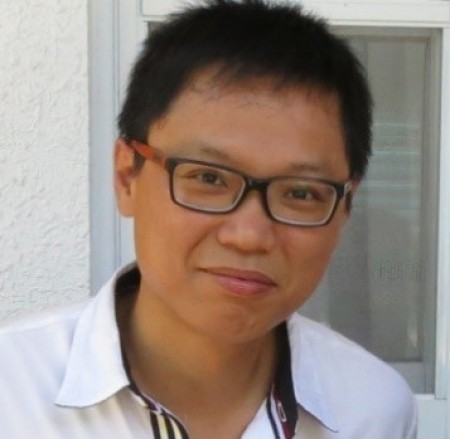
PhD in Electrical Engineering, National Tsing Hua University, Taiwan
Please visit my scholar profile at https://scholar.google.com/citations?user=U4r-b4QAAAAJ
Kao-Yueh (Benny) Kuo received his Ph.D. in Electrical Engineering from National Tsing Hua University, Taiwan, in 2015, where his research focused on quantum communication and error correction. He subsequently accumulated over 12 years of experience in the communication chip design industry, bridging theoretical advances with practical implementations in high-performance communication systems.
In 2019, he was appointed as a postdoctoral researcher at National Yang Ming Chiao Tung University, Taiwan, where he continued his work on quantum communication and error correction, with an emphasis on developing efficient coding and decoding strategies. In 2024, he joined the University of Sheffield, UK, as a Research Associate in the School of Mathematical and Physical Sciences, contributing to research on advanced quantum coding techniques. In 2025, he was appointed as a faculty member in the Department of Electrical Engineering at Yuan Ze University, Taiwan.
His research centers on classical and quantum communications, with a particular emphasis on coding theory and iterative decoding methodologies. His work aims to advance reliable and efficient information transmission, especially in quantum regimes, by developing practical algorithms that bridge theoretical limits and real-world implementations.
Prior to my appointment as a faculty member, my experience includes the following:
Industrial and Research Experiences (工研院、通訊晶片設計產業;陽明交大、與英國雪菲爾大學研究員):
Postdoctoral Research:
1.5 years (2024 Mar to 2025 July) at University of Sheffield (UK):
Quantum Erasure-Capacity-Achieving Codes and Decoding
• co-work with people in LDSD group; mainly with Dr. Yingkai Ouyang (https://scholar.google.com.sg/citations?user=yFDVBfoAAAAJ)
5 years (2019 Jan to 2024 Feb) at NYCU (Taiwan):
Quantum Coding Theory and Belief Propagation (BP) Decoding
• co-work with Prof. Ching-Yi Lai's (賴青沂) (https://scholar.google.com.au/citations?user=XeL5FpQAAAAJ)
Industrial Experience:
∼6.5 years, DSP Engineer & Deputy Manager (2012 Aug to 2018 Dec)
Metanoia Comm. (Hsinchu, Taiwan): Powerline Comm. / DSL & GFAST
• OFDM demodulator/Log-likelihood ratio (LLR) generation algorithms
• LDPC decoder algorithm and fixed-point design
• OFDM + LDPC bit-loading algorithm and firmware
• PHY + SW integration and FPGA verification
• Leading DSP team and PHY-SW members
• Analysis/Design-review for all SDR modules for VDSL & G.FAST
∼2 years, Physical-Layer Software Engineer (2006 Nov to 2008 Aug)
Mobile Device Inc. (Zhubei, Taiwan): Mobile WiMAX
• Physical-Layer Software Design and Implementation.
• WiMAX firmware features (e.g., random access (ranging) controller)
4 years, Communication-Algorithm Engineer (2002 Oct to 2006 Oct)
Industrial Technology Research Institute (ITRI): WCDMA / LTE System
• 3G handset measurement algorithm & fixed-point design
• 4G LTE multi-cell multi-UE simulator (技轉黃經堯老師研究室)
Quantum Error Correction Codes,
Iterative Decoding,
Algorithm Design for Communication Chip and Modem
For the most up-to-date list, please visit https://scholar.google.com/citations?user=U4r-b4QAAAAJ
As of April 2026, the list of my journal papers is as follows:
1. K.-Y. Kuo and Yingkai Ouyang, “Degenerate quantum erasure decoding,” nature partner journal Quantum Information (npjQI), March, 2026. (IF 8.3) (CiteScore: 14.9)
2. K.-Y. Kuo and C.-Y. Lai, “Generalized quantum data-syndrome codes and belief propagation decoding for phenomenological noise,” IEEE Transactions on Information Theory, 71 (3), 1824–1840, 2025. (IF 2.9) (CiteScore: 5.5)
3. C.-Y. Lai and K.-Y. Kuo, “Harnessing Coding Theory for Reliable Network Quantum Communication,” in IEEE Wireless Communications, 31 (4), 82–88, 2024. (IF 11.5) (CiteScore: 21)
4. C.-Y. Lai, K.-Y. Kuo and B.-J. Liao, “Syndrome decoding by quantum approximate optimization,” Quantum Information Processing, 23 (11), article no. 368, 2024. (IF 2.2) (CiteScore: 4.1)
5. K.-Y. Kuo and C.-Y. Lai, “Exploiting degeneracy in belief propagation decoding of quantum codes,” nature partner journal Quantum Information (npjQI), vol. 8, article no. 111, 2022. (IF 8.3) (CiteScore: 14.9)
6. C.-Y. Lai and K.-Y. Kuo, “Log-domain decoding of quantum LDPC codes over binary finite fields,” IEEE Transactions on Quantum Engineering, vol. 2, article no. 2103615, 2021. (IF 4.6) (CiteScore: 9.2)
7. K.-Y. Kuo and C.-Y. Lai, “Refined belief propagation decoding of sparse-graph quantum codes,” IEEE Journal on Selected Areas in Information Theory, vol. 1, no. 2, pp. 487–498, 2020. (IF 2.2) (CiteScore: 7.5)
8. K.-Y., Kuo, and C.-C. Lu, “On the hardnesses of several quantum decoding problems,” Quantum Information Processing, 19, 123, 2020. (IF 2.2) (CiteScore: 4.1)
For the most up-to-date list, please visit https://scholar.google.com/citations?user=U4r-b4QAAAAJ
As of April 2026, the list of my conference papers is as follows:
1. C.-F. Kung, K.-Y. Kuo, and C.-Y. Lai, “Efficient Approximate Degenerate Ordered Statistics Decoding for Quantum Codes via Reliable Subset Reduction,” accepted by IEEE Int. Symp. Top. Coding (ISTC), 2025.
2. K.-Y. Kuo and C.-Y. Lai, “Decoding Strategies for Generalized Quantum Data-Syndrome Coding Problems,” in Proc. IEEE Int. Symp. Inf. Theory (ISIT),pp. 2490–2495, 2024.
3. C.-F. Kung, K.-Y. Kuo and C.-Y. Lai, “On Belief Propagation Decoding of Quantum Codes with Quaternary Reliability Statistics,” in Proc. IEEE Int. Symp. Top. Coding (ISTC), 2023.
4. K.-Y. Kuo and C.-Y. Lai, “Comparison of 2D topological codes and their decoding performances,” in Proc. IEEE Int. Symp. Inf. Theory (ISIT), pp. 186–191, 2022.
5. K.-Y. Kuo, I.-C. Chern and C.-Y. Lai, “Decoding of quantum data-syndrome codes via belief propagation,” in Proc. IEEE Proc. IEEE Int. Symp. Inf. Theory (ISIT), 2021, pp. 1552–1557.
6. K.-Y. Kuo and C.-Y. Lai, “Refined belief-propagation decoding of quantum codes with scalar messages,” in Proc. IEEE Globecom Workshops (GC Wkshps), pp. 1–6, 2020.
7. K.-Y. Kuo and C.-Y. Lai, “The encoding and decoding complexities of entanglement-assisted quantum stabilizer codes,” in Proc. IEEE Proc. IEEE Int. Symp. Inf. Theory (ISIT), pp. 2893–2897, 2019.
8. K.-Y. Kuo and C.-C. Lu, “On the hardness of decoding quantum stabilizer codes under the depolarizing channel,” in Proc. IEEE Proc. Int. Symp. Inf. Theory. Appl. (ISITA), pp. 208–211, 2012.
9. K.-Y. Kuo and C.-C. Lu, “A further study on the encoding complexity of quantum stabilizer codes,” in Proc. IEEE Proc. Int. Symp. Inf. Theory. Appl. (ISITA), pp. 1041–1044, 2010.
Best Paper Award for Academic Excellence in Communication Systems (Track A)
at the 2022 National Symposium on Telecommunications (NSTC Telecom 2022)